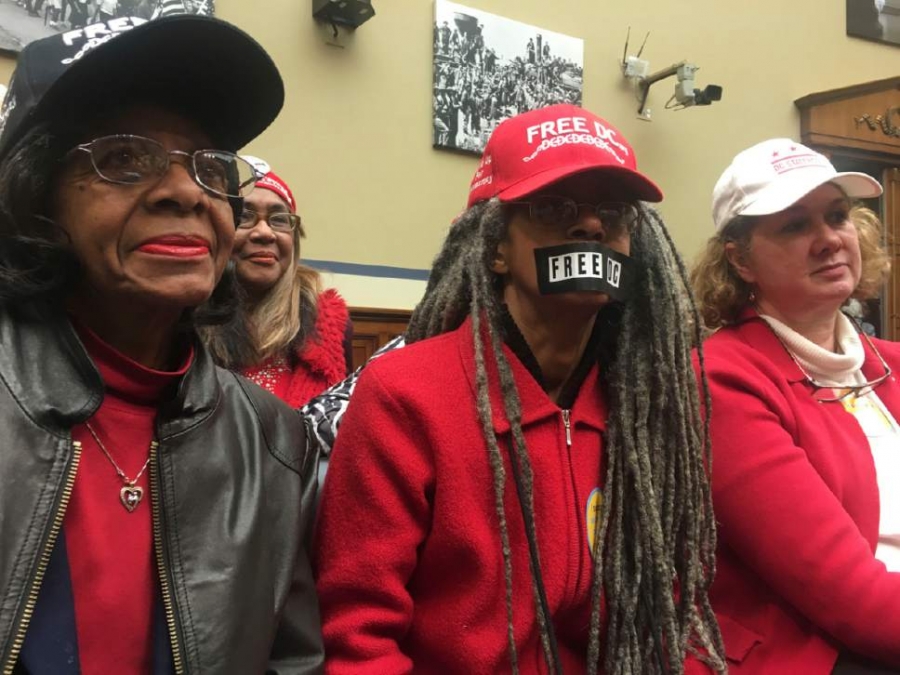
Case in point: The District of Columbia's Health and Human Services Committee has twice approved the Death with Dignity Act of 2015. The act allows certain terminally ill people the option of voluntarily and legally ending their life in a peaceful, humane and autonomous way. Polls confirm that 67 percent of Washingtonians are in favor of the bill. Mayor Muriel Bowser signed the act in December, however, Chaffetz has vowed to lead efforts within Congress to prevent the bill from becoming law. His arguments against the bill reflect common misperceptions, describing the Death with Dignity Act (DWDA) as "assisted suicide."
Let's address the facts, Rep. Chaffetz: Suicide is an act taken by a deeply depressed or mentally ill individual. DWDA is reserved for a very different population — the terminally and physically ill, as verified by no less than two physicians attesting to a life expectancy of six months or less. If either of these two physicians suspects mental illness, they are obligated by law to refer the individual to a mental health practitioner for evaluation before proceeding. With over two decades of experience with DWDA, no convincing evidence exists to suggest that the act has been used to coerce, discriminate or abuse any vulnerable populations. By continuing to reference evidence that does not exist and using reasoning based upon misperceptions, Chaffetz promotes an argument that is simply not true.
The U.S. Supreme Court has upheld DWDA as within the authority of the states to decide (Gonzales v. Oregon, 546 U.S. 243 (2006)). Oregon (1997), Washington (2009), Montana (2009), Vermont (2013), California (2016) and Colorado (2016) have all enacted DWDA laws. These laws provide an option for competent patients (determined by at least two doctors) who are approaching the end of their life to choose the manner and timing of their death. Certainly this is not a palatable option for most. In fact, up to one-third of DWDA patients who fill their end-of-life prescriptions never use them — but knowing that they still have that choice available to them is reassuring. We face similar poignant choices in many other matters of life — choosing where we will give birth (or, in some cases, even when), where or when we will marry, retire, etc. When faced with an imminent death, having the option of choosing when, where and how to face our death — essentially, to craft the legacy of our death — stands as a deeply personal, individual and private right.
Health care providers take pride in tailoring our treatment recommendations to each individual's characteristics and goals. This patient-centered approach is antithetical to the judgmental eye Chaffetz has cast on the voters of Washington.
Chaffetz is absolutely right in one respect. There are some matters where our federal government should not interfere. The freedom of the terminally ill to choose when, how and where they will die is one. The citizens of Washington, D.C., have democratically spoken. Congress may have the authority to reverse their decision, and Chaffetz may personally disagree. But egotistically using his office to oppose their clearly stated wishes is an abuse of power granted to him by the very people he has sworn to serve.
The authors, all Utah health care professionals, are Anna Beck, M.D.; Jonathan Whisenant, M.D.; Lou Borgenicht, M.D.; Jason Stinnett, M.D.; Gabe Fontaine, Pharm.D., BCPS; Mary E. Randle, NP, palliative care; Ray Thomason, M.D.; Theresa Werner, M.D.; Margaret S. Lunt, M.D.; Cathy Baxter, FNP, RN; David Shupe, M.D. and Wilbur Dattilo, M.D.
View this op-ed online at The Salt Lake Tribune.






 Please wait...